The tetractys in mysticism, Hermeticism and religion
Why a site that wants to give the tetractys a scientific basis deals with mysticism, and what the four elements have to do with it.
Why deal with mysticism when the subject is the scientific basis of the tetractys? Because the testimony of religion, mysticism and occultism can shed a good deal of light, if you read it with two questions in mind: What did the ancients know? And: Which of these old images agree with what can be shown geometrically and by calculation? There is no shortage of such parallels.
Circle and sphere
On this view the tetractys can only be understood through the geometry of circle and sphere. The circle has a mystical meaning in every culture. It stands for wholeness. With a point at its centre, for creation and the sun. Its symmetries around the centre, shown by regular polygons and star polygons, are as much at home in the Christian West, in Rosicrucianism, Freemasonry and the Kabbalah as in Eastern paths of initiation.
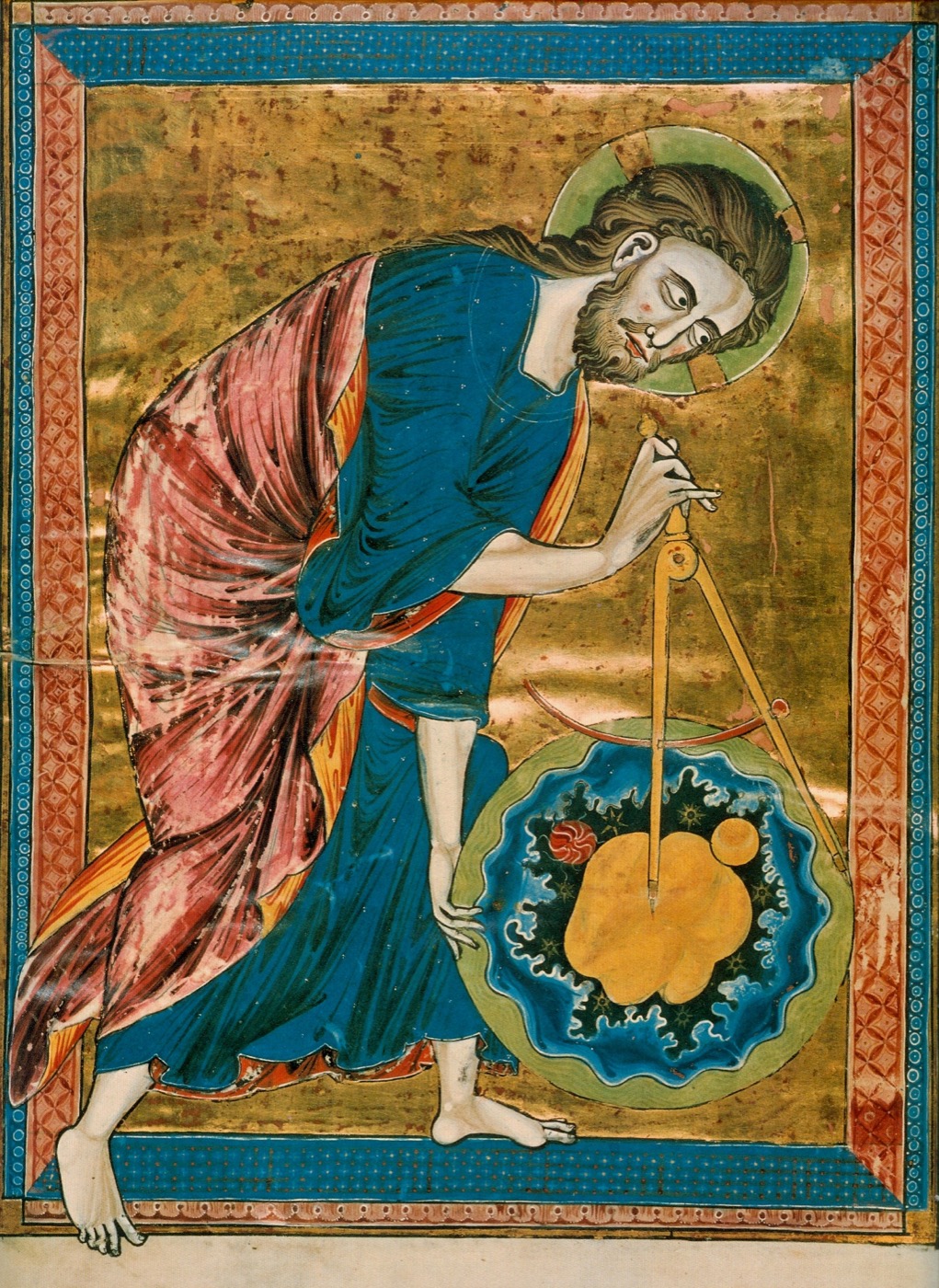
The sphere is perfect symmetry: every point on its surface has an opposite point, and it looks the same from every side. No other form encloses so much space with so little surface, which is why it protects its interior best. Light and all other forces spread spherically from a centre. Planets and suns are spheres, and the balance of forces is symmetry. Symmetry is also the overarching theme of particle physics, with differential geometry and Lie groups. Hermeticism, too, revolves around balance: above and below correspond, the four elements hold each other in equilibrium, opposites depend on each other. In the Kabbalistic tree of life, the middle pillar stands for this.
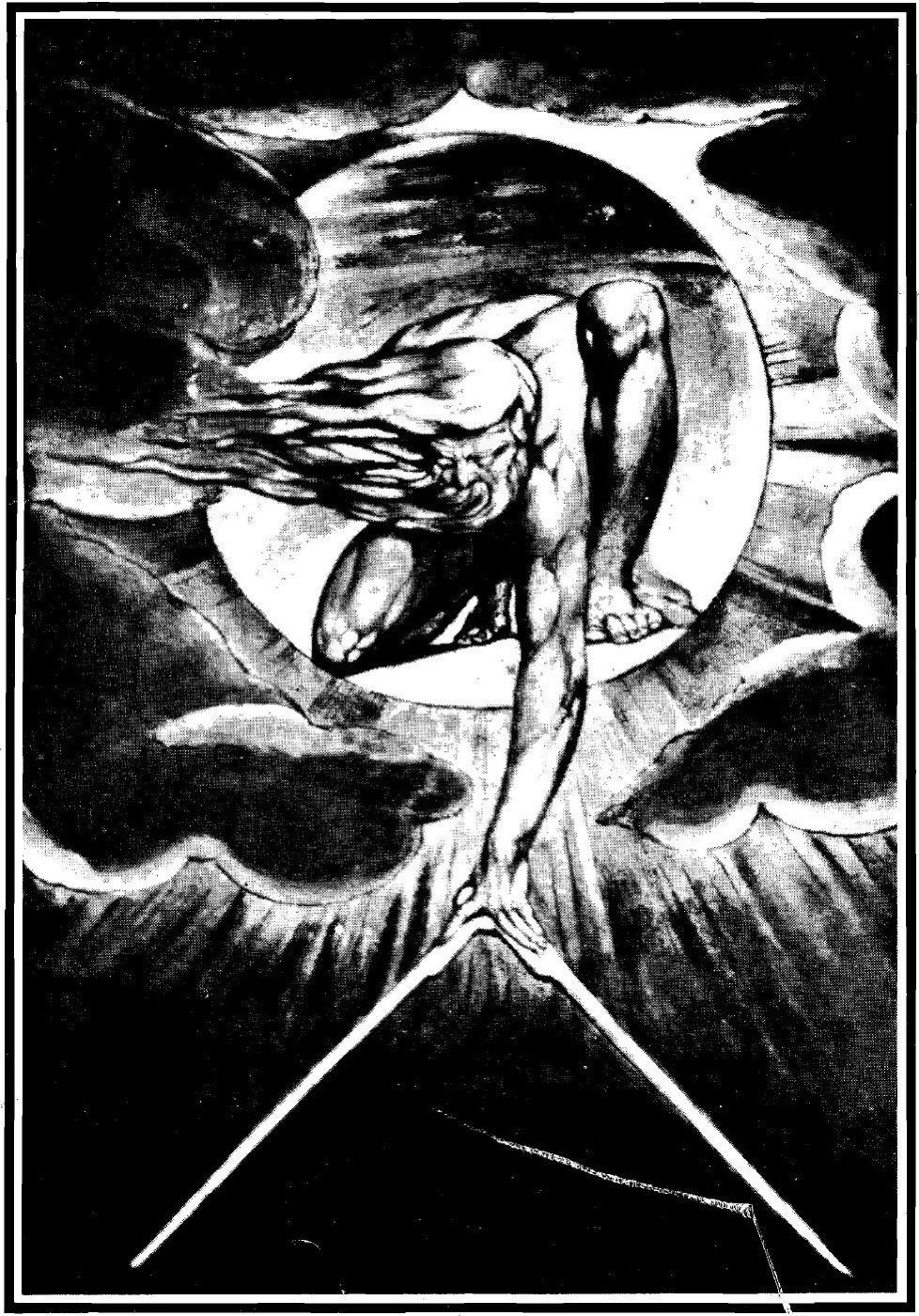
The four elements
Take the word tetractys, fourness, literally, and you come to one of the most important teachings of Hermeticism, the doctrine of the four elements: fire, air, water and earth. There are many interpretations of what is really meant by them. The best known assigns them to the four human temperaments, the “microcosm”:
| Element | Temperament | Basic attitude |
|---|---|---|
| Fire | choleric | willing |
| Air | sanguine | thinking |
| Water | phlegmatic | feeling |
| Earth | melancholic | being |
By the Hermetic principle of correspondence, the same forces must also be at work in the “macrocosm”. They can be read as the four great constants without which human existence would be unthinkable:
| Element | Fundamental quantity | Biblical figure |
|---|---|---|
| Fire | energy | lion |
| Air | time | eagle |
| Water | space | man |
| Earth | matter | ox |
Physics has four fundamental forces: the strong and weak interactions, electromagnetism and gravity. Describing them in a single theory is physics’ greatest unsolved problem. Hermeticism also knows four fundamental forces.
The four living creatures
In the Bible the four elements appear as the four winged creatures lion, ox, man and eagle that bear the throne of God: in the vision of Ezekiel and in the Revelation of John. Later they became the symbols of the four evangelists.
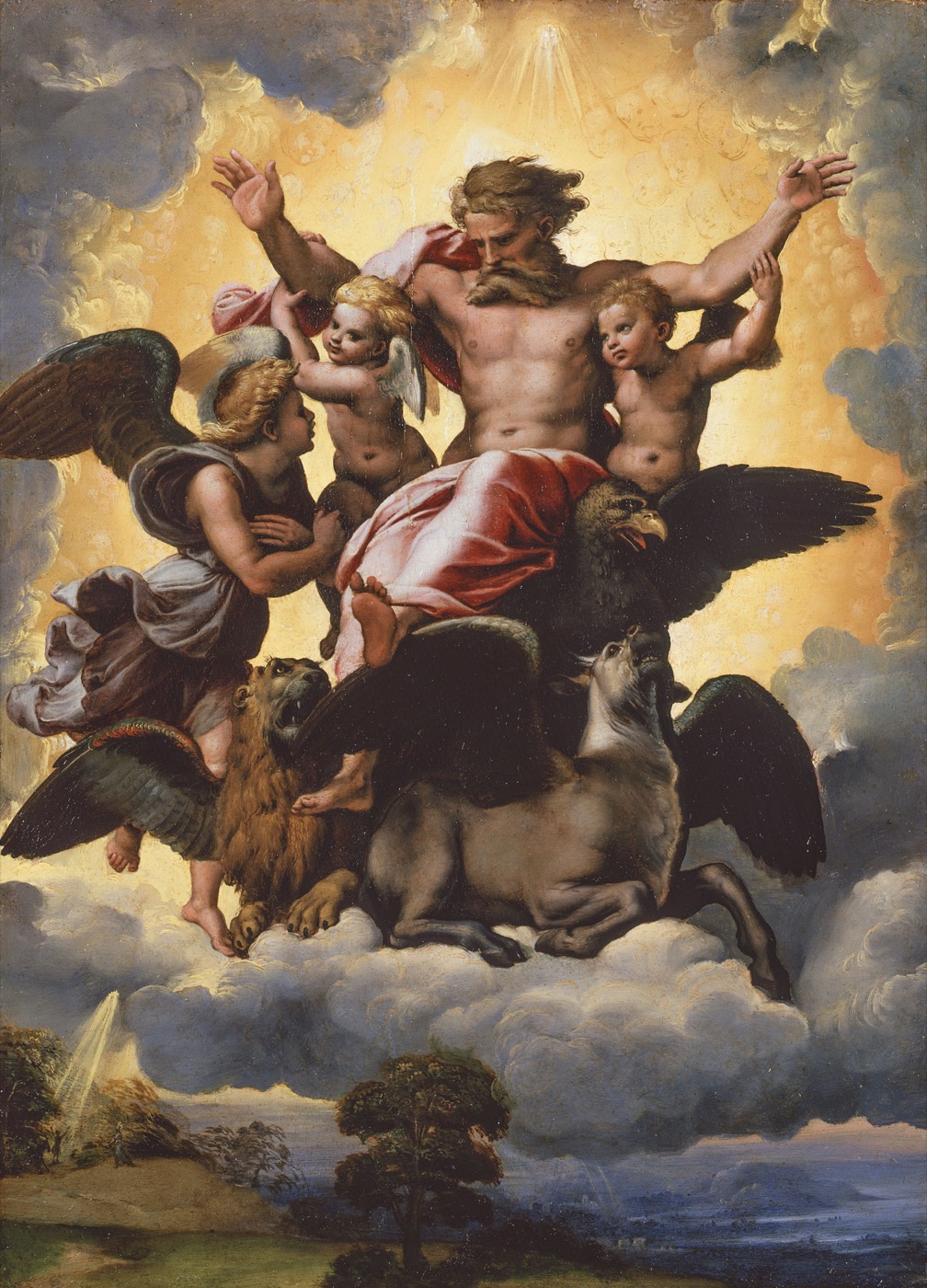
The meaning of these four creatures reaches far beyond the Bible. The tarot card The World shows them in its four corners. The fourfold structure of the tarot, and with it the four suits of playing cards, goes back on this reading to the same origin. Is the Bible, then, more scientific than one might think?
The figures
Triangle, square, pentagram and hexagram carry great symbolic weight in every Hermetic teaching. They are exactly the figures that are indispensable for understanding the tetractys:
The four start figures of the tetractys.
Everyday examples: the eye of God in a triangle on churches as a sign of the Trinity, the Star of David or hexagram over synagogues as a sign of the covenant between God and humanity, the pentagram as a protective amulet, which for centuries has represented the human being as “God in matter”.
How a rich order arises from a circle with a point at its centre is shown by the simplex. The first figures to appear are the triangle, square, pentagram and hexagram:
As the number of points grows, triangle, square, pentagram and hexagram emerge from the circle and its centre.
People reflected on the construction of such figures more than once in earlier centuries. The Catalan philosopher Ramon Llull (c. 1232–1316) developed in his Ars magna, the “great art”, a system meant to lead to knowledge through the mechanical combination of concepts on circular discs. Leibniz, a pioneer of mathematical logic, took up these ideas. Llull’s circles are strikingly similar to the simplexes.
An objection: the pentagram above the elements
Readers familiar with hermetic teachings may pause here. There the pentagram usually does not stand in a row beside three other figures but above the fourfold of the elements, as the spirit ruling the four: four points for fire, air, water and earth, the fifth for spirit. The Kabbalah embeds the four elements in an encoded number lore, and some philosophers see the tetractys in the leaps of dimension, point, line, surface, solid. To our present understanding none of this quite fits together.
Where did the ancient thinkers draw their convictions from? As philosophers they looked critically at the world, and what they saw was transient, a constant flow of becoming and passing away. So they searched for the eternal, unchanging laws behind it, accessible only to thought. The Pythagoreans studied arithmetic, geometry and music theory, they were at once a school of the sciences and a religious mystery brotherhood, and they paid special attention to the pentagram. Search today for “the” tetractys and you find it in music theory, while the hermetic works insist on the doctrine of the four elements.
An order in stages
Perhaps the known models of the tetractys can be fitted without contradiction into one comprehensive, graded order, reaching from the foundations of number theory via the laws of symmetry and physics into the material world. If the tetractys meant as much to the Pythagoreans as their veneration shows, it must cover large domains, perhaps the all-embracing unity itself. Whether it is a figment of ancient thinkers or more is to be shown in the individual topics of this site. For the mystical reading, though, one has to stay with the doctrine of the four elements and ask what it might mean.
Right angles only in the even
The cycles in four phases and the rotation matrix in the number line are described in The tetractys at a glance. One observation belongs with them: only in polygons with an even number of vertices can right angles be formed between the vertices, in odd ones not a single one. This also holds for all star figures, according to their divisors. The reason is that only with an even number of vertices do two vertices lie exactly opposite each other, joined by a line through the centre, and every angle over a diameter is a right angle by Thales’ theorem. This makes it understandable why the Pythagoreans carried their number lore over to the cosmos (see Simplex – the solid form of number).
Space as a sphere
All cycles in the cosmos and on earth, in living and non-living nature, follow this fourfold periodicity. But what is the empty space like in which they take place? If from a centre all directions reach equally infinitely far, infinite space is a sphere. And since in infinite space every point is a centre, every point should have the same properties as its neighbours, so that space forms a unity in itself, a fractal.
This is exactly what the densest packing of equal spheres achieves. Joining their centres gives a uniform lattice of triangles and squares, built from tetrahedral and octahedral cells and scalable at will: the cubic crystal systems, of the greatest importance in crystallography and philosophically significant from Plato via Kepler to Buckminster Fuller (see Space filling without gaps). The question of the nature of space and the divine unity occupied Plato’s Timaeus as much as the Neoplatonists and the Kabbalists, already in the Sefer Yetzirah (see The Kabbalah).
For the murals in the Neues Museum in Berlin, Wilhelm von Kaulbach drew Pythagoras with a sphere in his right hand and a hexagram in his left. The two belong together: the best-known section of this sphere lattice is the stella octangula, which esotericism calls the “Merkaba”. It has a cross view and a six-pointed star view, and cross and hexagram are both symbols of the divine. The hexagram also stands for the macrocosm, the unlimited. The eight tips of the stella octangula form a cube, the only Platonic solid whose solid angles together make exactly one full sphere (see The Platonic solids). Without the blueprint of densely packed spheres, the essence of this “throne chariot of God” remains incomprehensible.
The science journalist Hoimar von Ditfurth warned, in substance, that besides genuine mystical fog there is also a fog of ignorance that takes everything it does not understand for mystical and so dismisses it. The following pages pursue the question of what the ancients really knew.