The tetractys in J. G. Herder's Metacritique
Herder set a fourfold formula of categories against Kant's forms of intuition and explicitly called it a tetractys.
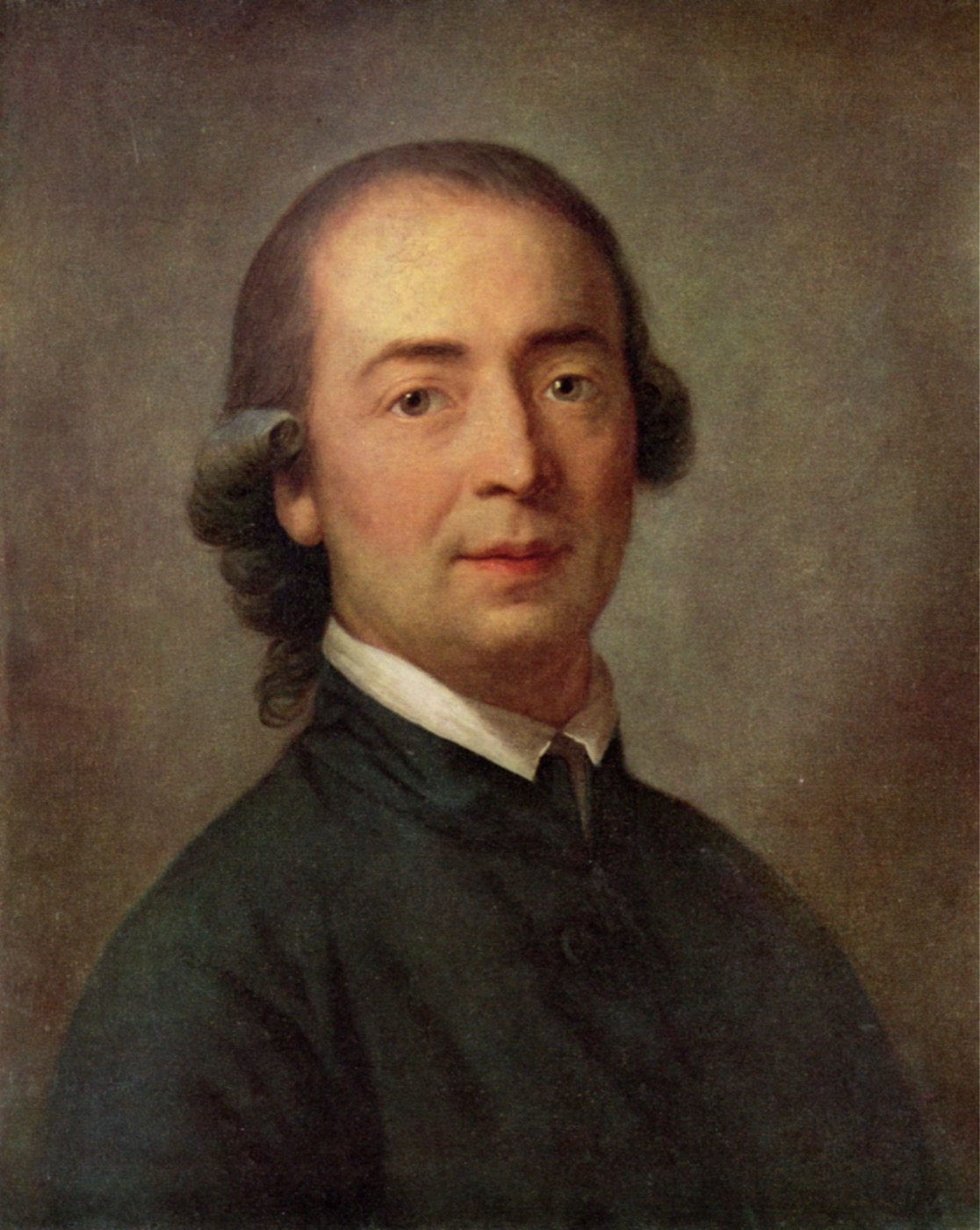
Johann Gottfried Herder (1744–1803) wrote the Metacritique of the Critique of Pure Reason in 1799, a polemic against Kant. The basis here is the study Heilige Tetraktys. Herders metakritische Hermetik (Sacred tetractys: Herder’s metacritical Hermeticism) by Florian Mayr (Novalis Verlag, 2006).
Pupil and opponent of Kant
As a young student in Königsberg Herder had heard Kant lecture, in the years 1762 to 1764, and was enthusiastic about him. Kant was not yet the philosopher of the three Critiques but a teacher lecturing on metaphysics, logic and mathematics as well as on natural science, geography and ethics. Later Herder became court preacher in Bückeburg and in 1776, at Goethe’s urging, general superintendent in Weimar, the highest clergyman of the duchy. His Ideas on the Philosophy of the History of Mankind made him one of the most influential thinkers of his time.
Herder could never warm to Kant’s Critique of Pure Reason (1781). Kant separated sharply between what the senses supply and what the understanding adds, and he called space and time forms of our intuition, not properties of things themselves. Herder considered this an artificial dissection of the living mind. His Metacritique of 1799 is the attempt to set against his old teacher a holistic theory of knowledge, and for this he reached for the oldest formula of wholeness he knew.
The fourfold of the soul
In the Metacritique Herder explicitly calls his central formula a tetractys. In essence he writes: this fourfold is an act of the soul. Whoever divides this tetractys destroys the nature of human understanding. For Herder, following the Pythagoreans, this fourness is the ground plan of all knowing: this is how the human mind is built, and this is how it relates to the world. He sees in it, as it were, the formula of “divine knowing” and the cause of a “system of living forces”.
Its four members are an origin, two opposites and their union, drawn as a cross with arms of equal length. It can be filled with various corresponding concepts.
Applied to the four start figures, as a deliberately speculative assumption:
| Start figure | Herder’s scheme | Interpretation |
|---|---|---|
| Triangle | cause (axiom) | God |
| Pentagram | thesis | time |
| Hexagram | antithesis | space |
| Double pentagram | synthesis | matter |
The four start figures. According to the table above the triangle stands for the cause, the pentagram for the thesis, the hexagram for the antithesis and the double pentagram for the synthesis.
Kant, Paracelsus and the Kabbalah
Kant, too, separated space and time in his transcendental aesthetic: space is the condition of outer perception, time that of inner perception. This resembles the old teaching of microcosm and macrocosm, in which since Agrippa the pentagram has been assigned to man as the small world and since Eliphas Lévi the hexagram to the great world. This website carries this further as its own interpretation: microcosm, pentagram and time belong together, and so do macrocosm, hexagram and space.
Herder sets the sephirot scheme of the Kabbalistic tree of life against his own scheme, counting it among the symbolic-philosophical tools of the Pythagorean tradition. As already described under The Kabbalah: the Sefer Yetzirah and the tetractys can be read as two sides of one coin, and as early as 1494 Reuchlin compared the Tetragrammaton YHWH with the tetractys. Whether the Kabbalah is a philosophical edifice or esoteric nonsense is open to debate. What matters is what its true contents are and how they are interpreted or distorted.
Herder and Freemasonry
In 1766 Herder was initiated in Riga into the lodge “Zum Schwert” (To the Sword), and in 1783, like Goethe, he joined the Order of the Illuminati, a short-lived secret society of the Enlightenment that was banned in Bavaria as early as 1784 and 1785. In his late journal Adrastea he returned in dialogues of his own on Freemasonry to Lessing’s Ernst and Falk (see What a secret is). Like Lessing he sought the essence of the brotherhood not in its signs but in what it makes of people.
The full comparison of the fournesses is in the tetractys analogy table.
Sources and further reading
Sources
- Johann Gottfried Herder, Eine Metakritik zur Kritik der reinen Vernunft (A metacritique of the Critique of Pure Reason), Leipzig 1799
- Johann Gottfried Herder, Adrastea, Leipzig 1801 to 1803
- Immanuel Kant, Critique of Pure Reason, Riga 1781
- Johannes Reuchlin, De verbo mirifico, Basel 1494
Further reading
- Florian Mayr, Heilige Tetraktys. Herders metakritische Hermetik (Holy tetractys. Herder’s metacritical hermeticism), Schaffhausen 2006
- Rudolf Haym, Herder nach seinem Leben und seinen Werken, 2 vols., Berlin 1880 and 1885