What a secret is
Mysteries, lodges and secret teachings live by the secret. But there are three quite different kinds: the kept, the hidden and the unsayable. Why only the first can be betrayed, how to recognise a false secret and why silence still makes sense.
Almost all the teachings this website is about have to do with secrets. The Pythagoreans bound their pupils to silence, the Mysteries of Eleusis could not be revealed on pain of death, Hermeticists and Rosicrucians wrote in images only initiates were meant to read, and Freemasons still keep some things to themselves. The page Chance and pattern, by contrast, shows how easily one finds secrets where there are none. So are there no secrets at all?
The answer depends on what one means by a secret. The words themselves give a first hint. The Greek mysterion, from which our word “mystery” comes, derives from myein, “to close the eyes or lips”. The Latin secretum comes from secernere, “to set apart”. And the German geheim originally meant “belonging to the house, familiar”. A secret, then, is something closed, set apart, and at the same time something familiar that belongs only to those inside.
But behind this lie three very different things.
The kept secret
Everyone knows the first kind: some people know something they do not tell others. It may be a password, a sign of recognition or a procedure. Such secrets are quite real, but they have a weakness. They can be betrayed, and once betrayed they are gone.
Freemasonry learned this early. In 1730 Samuel Prichard published the rituals, questions and signs of recognition of the lodges in Masonry Dissected (see Freemasonry). Everything that could be kept quiet now stood in print in every London bookshop. The Grand Lodge changed some passwords, and the lodges went on working. They still exist almost three hundred years later. What follows? The printed secret cannot have been what held the lodges together.
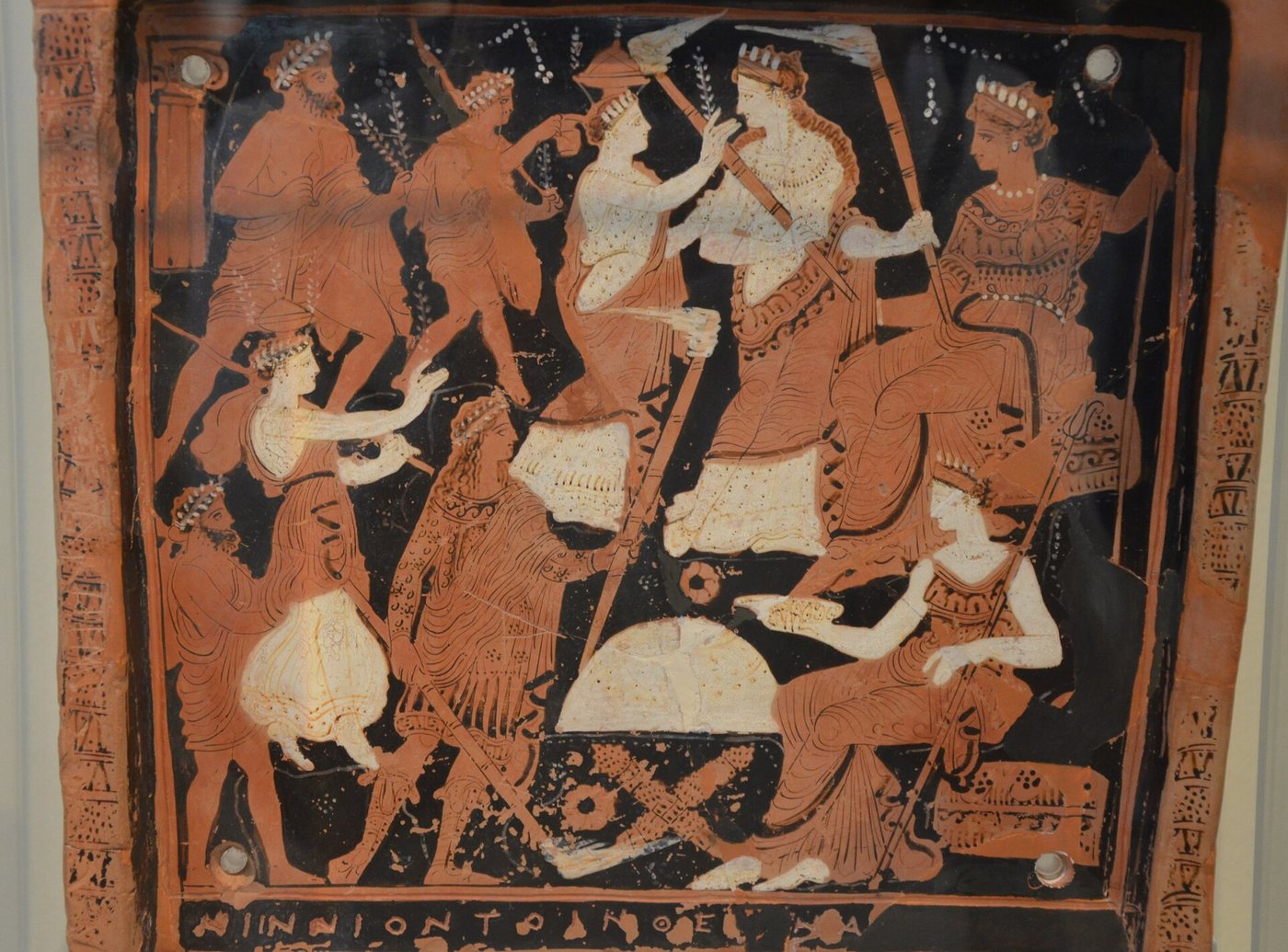
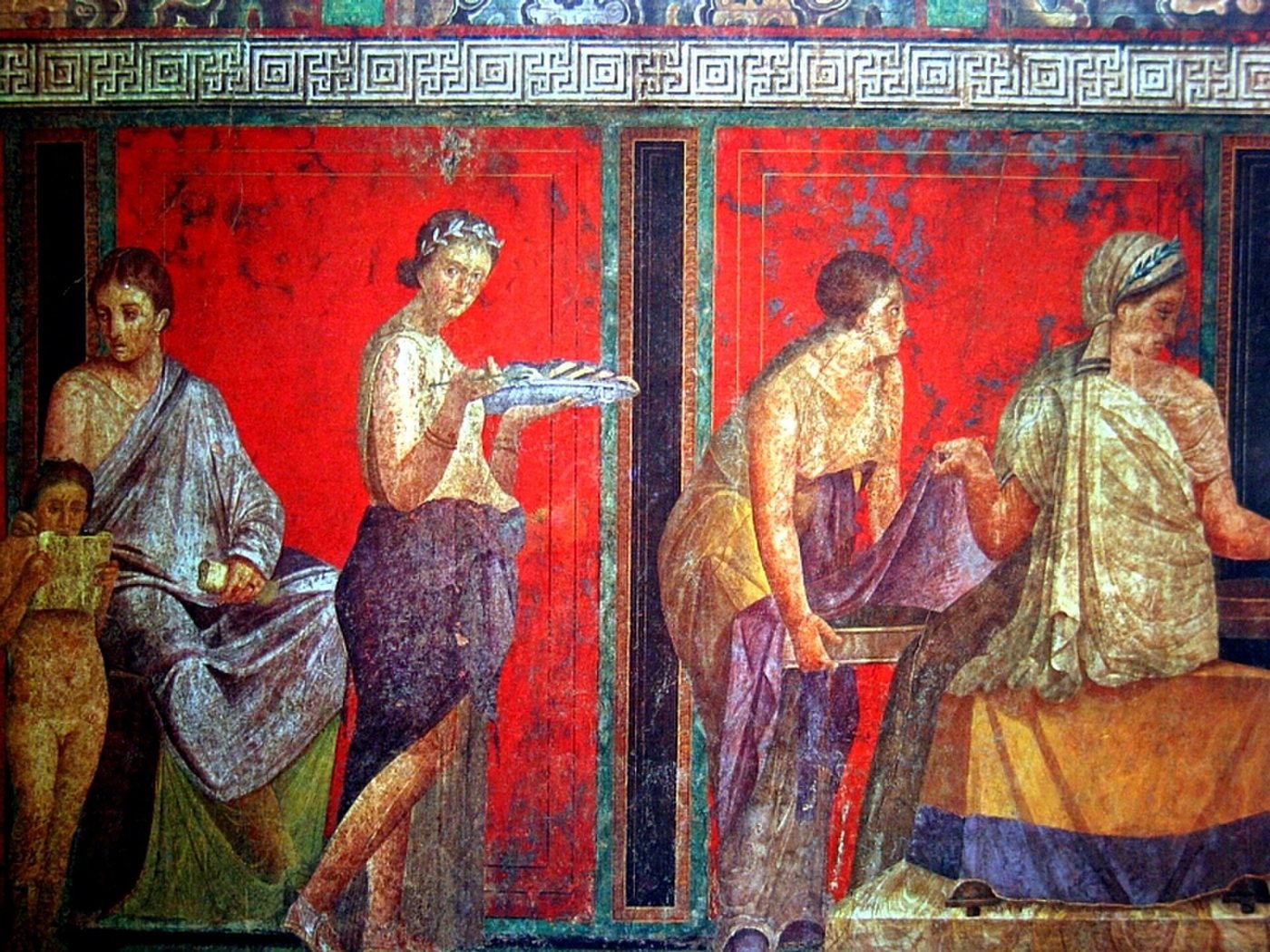
With the Mysteries of Eleusis it was similar and yet different. For over a thousand years, until the end of the fourth century AD, thousands were initiated there every year, and whoever revealed the rite faced the death penalty. To this day we know only in outline what happened there. But here too it is likely that the most important thing was not the procedure but what it did to people.
The hidden secret
The second kind is of quite another nature. Nobody has hidden it, and yet it is hidden. Heraclitus coined the famous sentence for it: “Nature loves to hide.” The order of the world does not lie on the surface. One has to look for it, and that takes work.
The best example on this website is the incommensurable. The Pythagoreans discovered that the diagonal of a square cannot be measured by its side, that there is no common measure, however small. The legend tells that Hippasus perished at sea for betraying this secret. Today it stands in every schoolbook. And yet for everyone who has not thought the proof through himself it remains hidden. He can repeat the sentence, but he does not know why it holds.
Such secrets cannot be betrayed, only recited. Whoever really wants to have them must walk the path himself. Johann Wolfgang von Goethe said this in a poem about nature, which reads in English roughly:
Nothing is inside, nothing is outside:
For what is within, that is without.
So seize without delay
The holy open secret.
An open secret: it lies before everyone’s eyes, and yet only those who have learned to look see it. Such secrets are the primes and the ratios of the tones, but also the orbits of the planets. Some are solved, some, like the distribution of the primes, are not to this day (see What remains open).
The unsayable secret
The third kind is the deepest. It cannot be betrayed because it cannot be put into words at all. It can only be experienced.
Aristotle said of the mysteries, as Synesius of Cyrene reports, that the initiates were not to learn something there but to experience something and be brought into a certain state. A mystery, on this view, is not knowledge one could pass on but an experience that changes one. Whoever describes it describes only its outside.
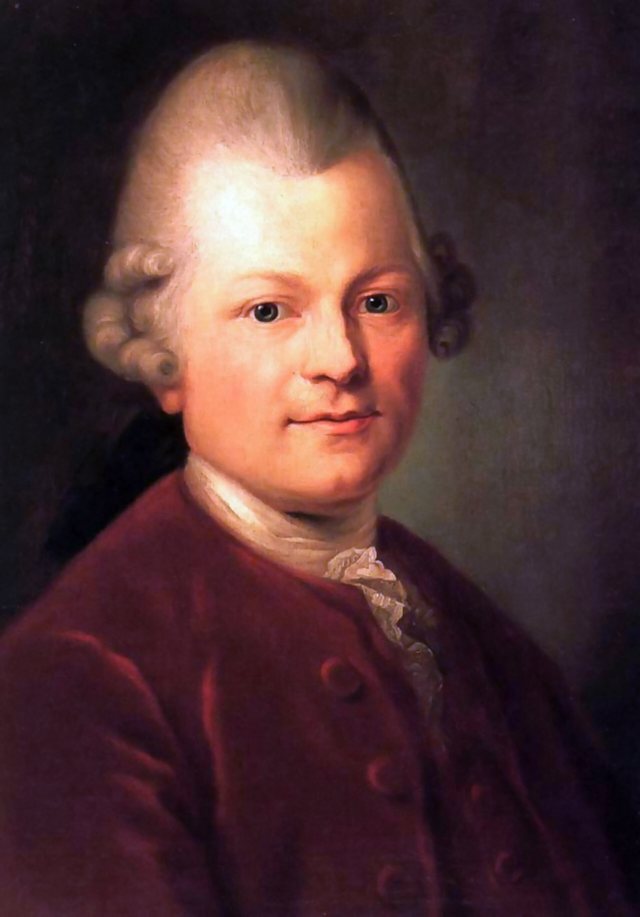
In 1778 Gotthold Ephraim Lessing said exactly this about Freemasonry in his Dialogues for Freemasons, named Ernst and Falk after their two speakers. Ernst asks what Freemasonry actually is, and Falk answers: “Something that even those who know it cannot say.” That explains the matter of Prichard. He could betray everything that can be said. What matters he could not betray, because it cannot be said.
Near the end of his Tractatus (1921), the philosopher Ludwig Wittgenstein wrote: “There is indeed the inexpressible. This shows itself, it is the mystical.” And the New Testament speaks of “the mystery which hath been hid from ages” and “now is made manifest” (Colossians 1:26). The Christian mysterion is thus precisely not locked-away knowledge but one that is openly proclaimed and still remains a mystery, because it must not only be understood but accepted and lived.
How to recognise a false secret
If there are these three kinds, one can also say what a false secret is. It presents itself as the third or second kind but is really only the first, or none at all.
A false secret claims, for instance, that a hidden truth is encoded in the measurements of the pyramid or in the letters of a name, which only the initiate can decipher. As the page Chance and pattern shows, such patterns can be found in any building whatever. A real hidden secret, by contrast, can be found by anyone who does the work, and everyone who has done it finds the same thing. Anyone can follow the proof of the incommensurable, and Venus draws its pentagram in the sky for everyone.
A false secret also almost always needs a gatekeeper: a teacher who alone has the key, a course that costs money, or a stage one reaches only after long loyalty. The real secrets of the second and third kind need no gatekeeper. A teacher can show where to look, but one must find it oneself, and then it belongs to one entirely.
And finally: a false secret withdraws from testing. It is hidden not because it is deep but because it does not want to be looked at. Real secrets stand up to every test, and the more closely one looks, the greater they become.
Why silence still makes sense
Does that mean the discretion of the Pythagoreans and the lodges is superfluous? Not necessarily. Silence can have three good reasons that have nothing to do with secret knowledge.
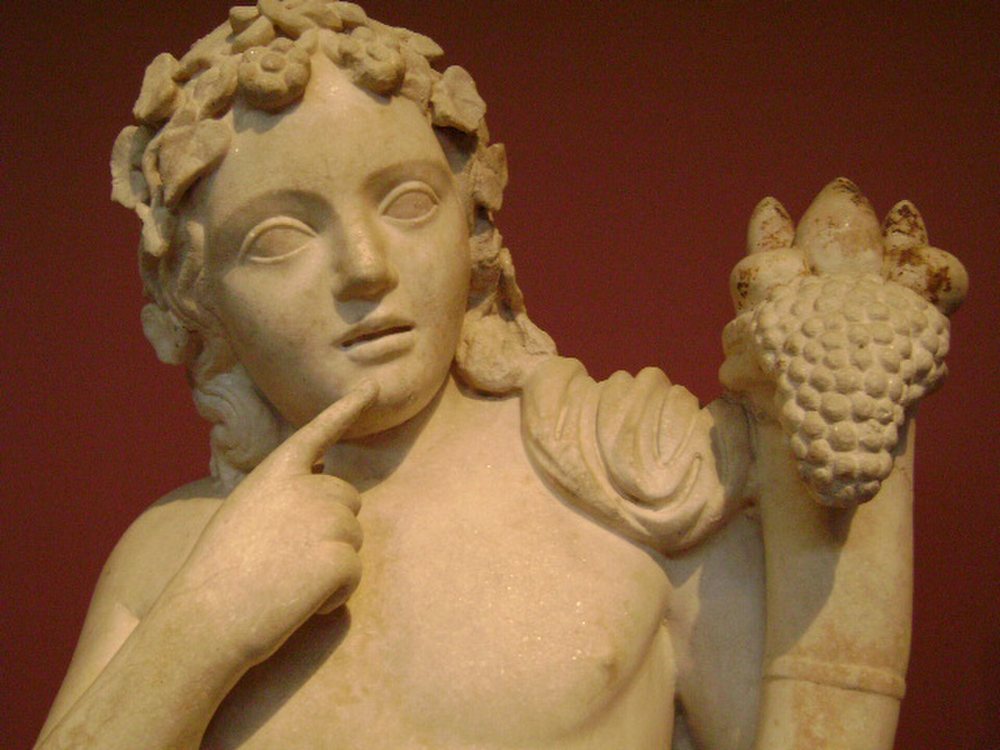
It can protect the experience. Whoever knows the course of an initiation beforehand no longer experiences it. Just as one does not want to learn the ending of a novel before reading it, a ritual too has its force only if it strikes one.
It can protect people. In many ages it was dangerous to be a Freemason, a Rosicrucian or a heretic. Discretion was then not secretiveness but protection for those who belonged.
And it can be an exercise. The five years of silence the Pythagoreans are said to have demanded of their pupils served not to hide something but to learn to listen and to master the tongue (see Rhetoric). Whoever can keep silent can also stay with himself.
What remains
There are secrets, but they are different from how they are often imagined. The kept ones are the least, for they can be betrayed. The hidden ones belong to everyone who walks the path, and no one can shorten it for him. And the unsayable ones can only be experienced, not told. Whoever has understood this no longer looks for the one hidden key that opens everything. He looks where truth is really found: in proof, in observation and in his own experience.
Sources and further reading
Sources
- Samuel Prichard, Masonry Dissected, London 1730
- Heraclitus, fragment B 123
- Johann Wolfgang von Goethe, Epirrhema, from the group of poems Gott und Welt, final edition, Stuttgart and Tübingen 1827
- Synesius of Cyrene, Dion 8 (Aristotle on the mysteries)
- Gotthold Ephraim Lessing, Ernst und Falk. Gespräche für Freimäurer, Wolfenbüttel 1778
- Ludwig Wittgenstein, Tractatus logico-philosophicus 6.522, 1921
- Colossians 1:26
Further reading
- Walter Burkert, Antike Mysterien. Funktionen und Gehalt, Munich 1990